What is Kitchen Hood Fire Suppression?
Kitchen hood fire suppression systems are pre-engineered wet chemical systems designed to automatically detect and suppress fires in commercial cooking equipment. These systems protect deep fryers, griddles, charbroilers, woks, and the exhaust hood and ductwork above them.
When a fire occurs, the system automatically releases a wet chemical agent that rapidly knocks down flames and creates a foam blanket over the cooking media, preventing re-ignition. The system also shuts off gas and electrical supply to cooking equipment.
Code Requirement
Hood suppression workspace
Semi-annual hood work captured against the same system record.
- UL 300 system context (CaptiveAire, Ansul R-102, Pyro-Chem) carried in the asset record.
- NFPA 17A and NFPA 96 citations pinned to the jurisdiction-adopted edition.
- Deficiency-to-proposal handoff against the same asset.
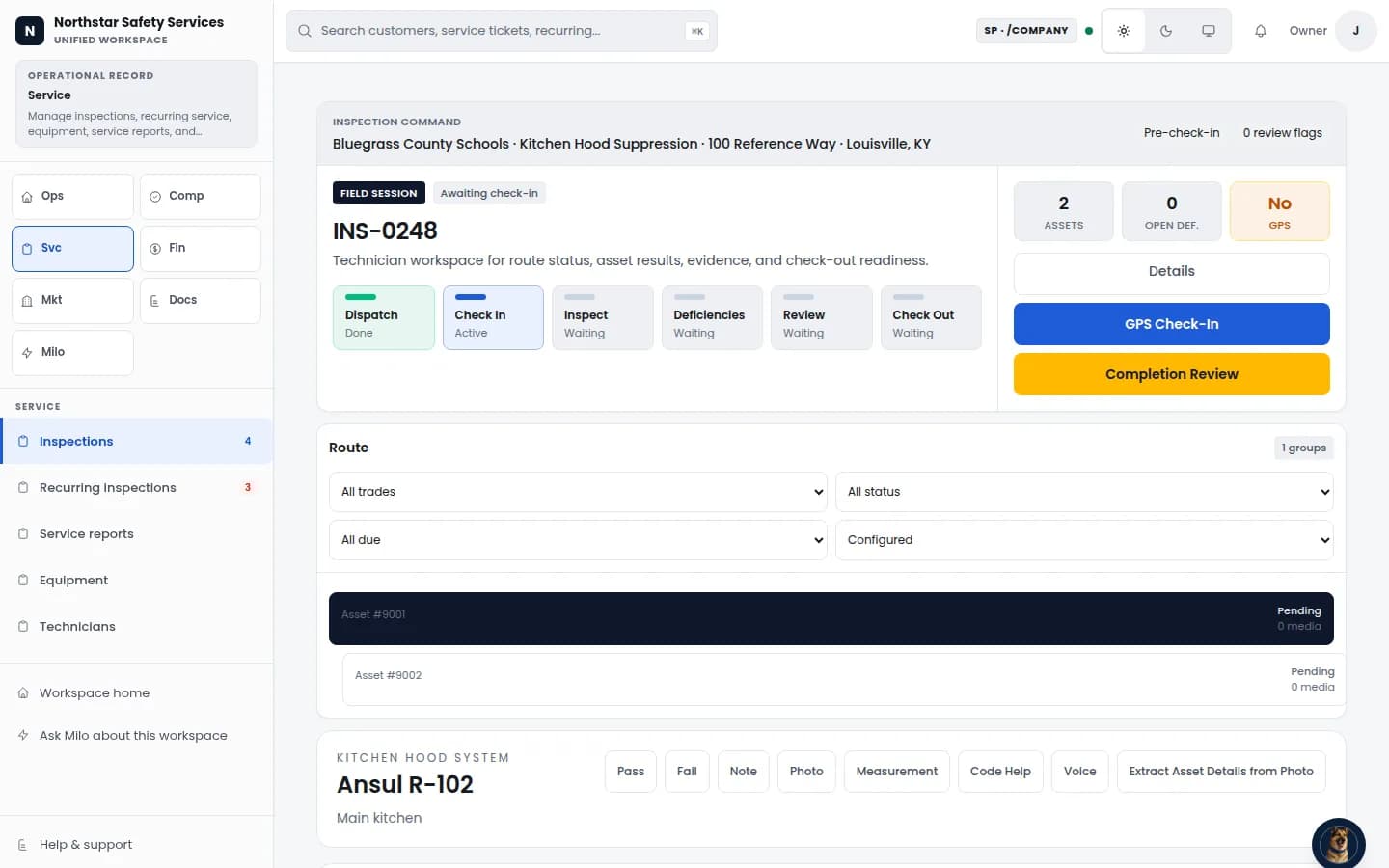
Live demo: a real semi-annual hood inspection renders system detail, workspace state, and report preview from the same record without re-keying.
What this means semi-annually
The system detail, the inspection workspace, and the report preview are different views of one record — the semi-annual cycle does not require an export between tools.
Live demo kitchen suppression workflow
More hood suppression surfaces.
Inspection type selection, system detail, and report preview. Real demo screens; no external delivery or customer send was invoked.
Automatic Detection
Fusible links or electronic sensors detect fires instantly and trigger automatic suppression
Wet Chemical Agent
UL 300 compliant agents create a foam blanket that prevents re-flash of cooking oils
Equipment Shutdown
Automatic gas and electric shutoff prevents continued fuel supply to the fire
Why Choose Guspora?
- Factory trained on Buckeye and CaptiveAire systems
- Authorized distributor for all major brands
- 24/7 emergency service available
- Competitive pricing on new installations
- Semi-annual inspection programs
- Fast response times throughout Kentucky
- Certified technicians with NICET credentials
- Complete documentation for AHJ compliance
Industries We Serve
We are factory trained and authorized to install, service, and inspect the following kitchen hood fire suppression systems:

The Kitchen Mister system uses a proprietary wet chemical agent delivered through specialized nozzles to rapidly suppress fires and prevent re-ignition. Known for reliability and ease of maintenance.
Key Advantage: Low-pH agent is gentle on stainless steel equipment, reducing cleanup costs after discharge
- UL 300 listed wet chemical system
- Automatic and manual activation
- Mechanical or electrical detection options
- Protected equipment includes fryers, griddles, ranges, and woks
- Protects hood, plenum, and duct
CaptiveAire offers two distinct system designs: CORE (Cylinder Over Range Equipment) for point-of-use protection and TANK systems for centralized suppression. Both feature 360° Firestat detection technology for reliable automatic activation.
Key Advantage: 360° Firestat detection provides superior fire sensing compared to traditional fusible links
- CORE: Individual cylinder per appliance group
- TANK: Centralized cylinder for larger kitchens
- 360° Firestat detection (not fusible links)
- Integrated with CaptiveAire ventilation systems
- Electric and gas shutoff capabilities
- MAD Device (Mechanical Activation Device) for manual activation
Not Sure Which System Is Right For You?
System Comparison
| Feature | Buckeye Kitchen Mister | CaptiveAire CORE | CaptiveAire TANK |
|---|---|---|---|
| Cylinder Location | Wall/Hood Mount | Above Equipment | Wall Mount |
| Detection Type | Fusible Link | 360° Firestat | 360° Firestat |
| Agent Type | Wet Chemical | Wet Chemical | Wet Chemical |
| UL 300 Listed | ✓ | ✓ | ✓ |
| Best For | Standard Kitchens | Small-Medium | Large Kitchens |
Inspection Requirement
Inspection Schedule
| Interval | Requirements |
|---|---|
| Monthly | Visual inspection by owner/operator: Check that system is armed, nozzle caps in place, manual pull station accessible, and no obvious damage. |
| Semi-Annual | Professional inspection required: Complete system examination including detection devices, nozzles, piping, agent cylinder, pressure gauges, and functional test of manual activation. |
| Annual | Full inspection with documentation review: All semi-annual requirements plus review of maintenance records, previous inspection reports, and any modifications. |
| 5-Year | Internal cylinder examination or hydrostatic test per DOT requirements. Some manufacturers require complete agent replacement. |
| 12-Year | Hydrostatic test of cylinders required. Many facilities choose to replace cylinders at this interval. |
Semi-Annual Inspection Includes:
- Verify system is properly armed and charged
- Inspect all fusible links for damage or grease buildup
- Check nozzle alignment and caps
- Examine piping for leaks or damage
- Test manual pull station operation
- Verify gas/electric shutoff function
- Check pressure gauge readings
- Inspect detection line routing
- Review and update inspection tags
- Provide documentation for AHJ
What We Provide:
- Factory trained technicians
- Complete inspection documentation
- Digital and physical inspection tags
- Deficiency reports with photos
- Priority scheduling for repairs
- Reminder notifications for next inspection
- Direct communication with AHJ if needed
- Emergency service availability
Common Inspection Findings
Minor Issues (Correct Same Day):
- Nozzle caps missing or damaged
- Grease buildup on fusible links
- Inspection tags outdated
- Manual pull station obstructed
Major Issues (Require Service):
- Low cylinder pressure
- Damaged detection line
- Gas shutoff not functioning
- Nozzles not aligned with equipment
System Specifications
| System Type | Pre-engineered wet chemical |
| Agent Type | Potassium-based wet chemical (UL 300) |
| Detection | Fusible link or 360° Firestat (varies by manufacturer) |
| Activation | Automatic via detection device, Manual via pull station |
| Cylinder Sizes | 1.5, 2.5, 3, 4, 6 gallon options |
| Operating Pressure | 195-240 PSI (varies by manufacturer) |
| Discharge Time | Approximately 30-60 seconds |
| Nozzle Coverage | Manufacturer-specific flow rates and patterns |
Code Requirements
| NFPA 96 | Ventilation Control and Fire Protection of Commercial Cooking Operations |
| NFPA 17A | Standard for Wet Chemical Extinguishing Systems |
| UL 300 | Fire Testing of Fire Extinguishing Systems for Protection of Commercial Cooking Equipment |
| IFC | International Fire Code Chapter 9 |
Protected Equipment
- Deep fat fryers (gas and electric)
- Griddles and flat-top grills
- Charbroilers and open-flame grills
- Woks and range tops
- Salamanders and cheese melters
- Exhaust hoods and plenums
- Ductwork (up to 20ft horizontal)
- Filters and grease extractors
Custom System Design