
Compliance & Inspections
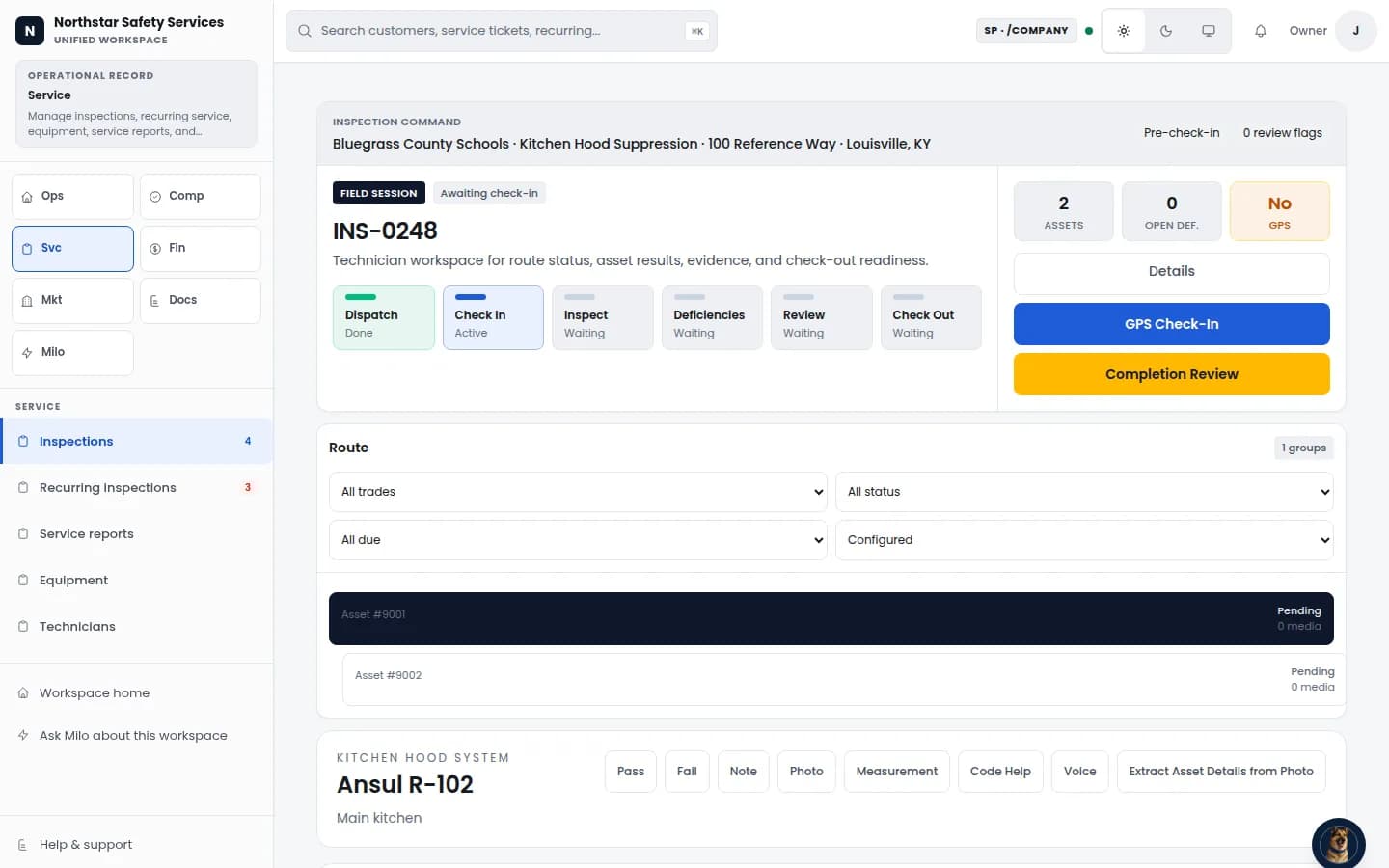
Run inspection stages, review flags, deficiencies, evidence, and completion from one workspace.
Watch DemoGuspora Compliance & Inspections
Every organization has requirements it must perform, monitor, prove, renew, review, or correct. Guspora connects those operating obligations to the people, facilities, assets, vendors, contracts, inspections, maintenance, documents, corrective work, and authorities they govern.
Fire departments and AHJs remain a powerful authority workspace inside the same system. They do not require a second copy of the inspection, deficiency, correction, and evidence record.
Universal Compliance & Inspections
Run inspection stages, review flags, deficiencies, evidence, and completion from one workspace.
Product walkthrough
The compliance engine connects the obligation to the operating record, then preserves the inspection, evidence, finding, deficiency, corrective action, stakeholder visibility, and review history around it.
Compliance & Inspections
Run inspection stages, review flags, deficiencies, evidence, and completion from one workspace.
Watch DemoReports & deficiencies
Move representative inspection work through evidence, findings, review, and completion stages. Configured trade templates vary.
Submit a report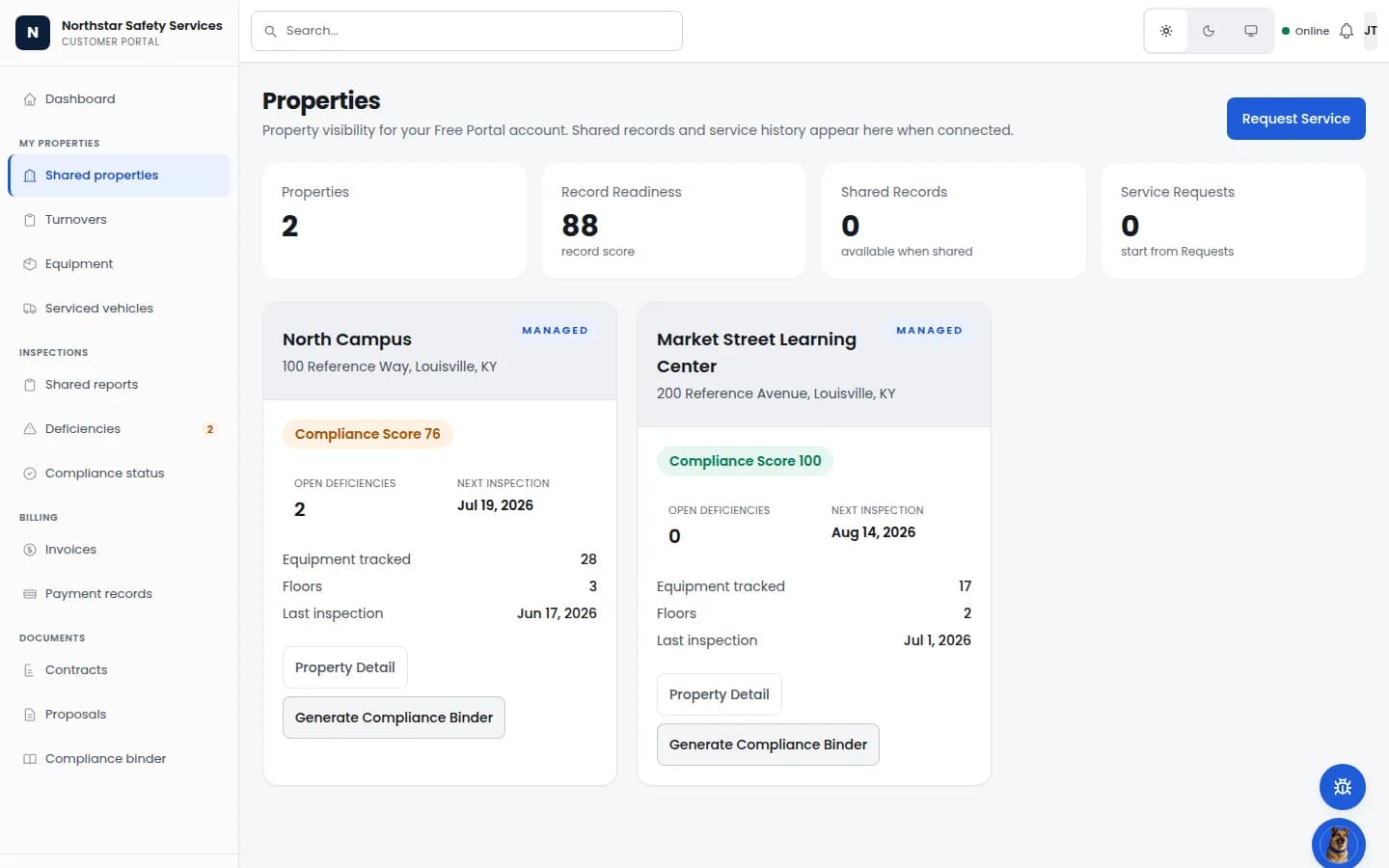
Property / facility / occupancy
Give authorized property users a scoped view of locations, readiness, equipment, deficiencies, and inspection dates.
View facility records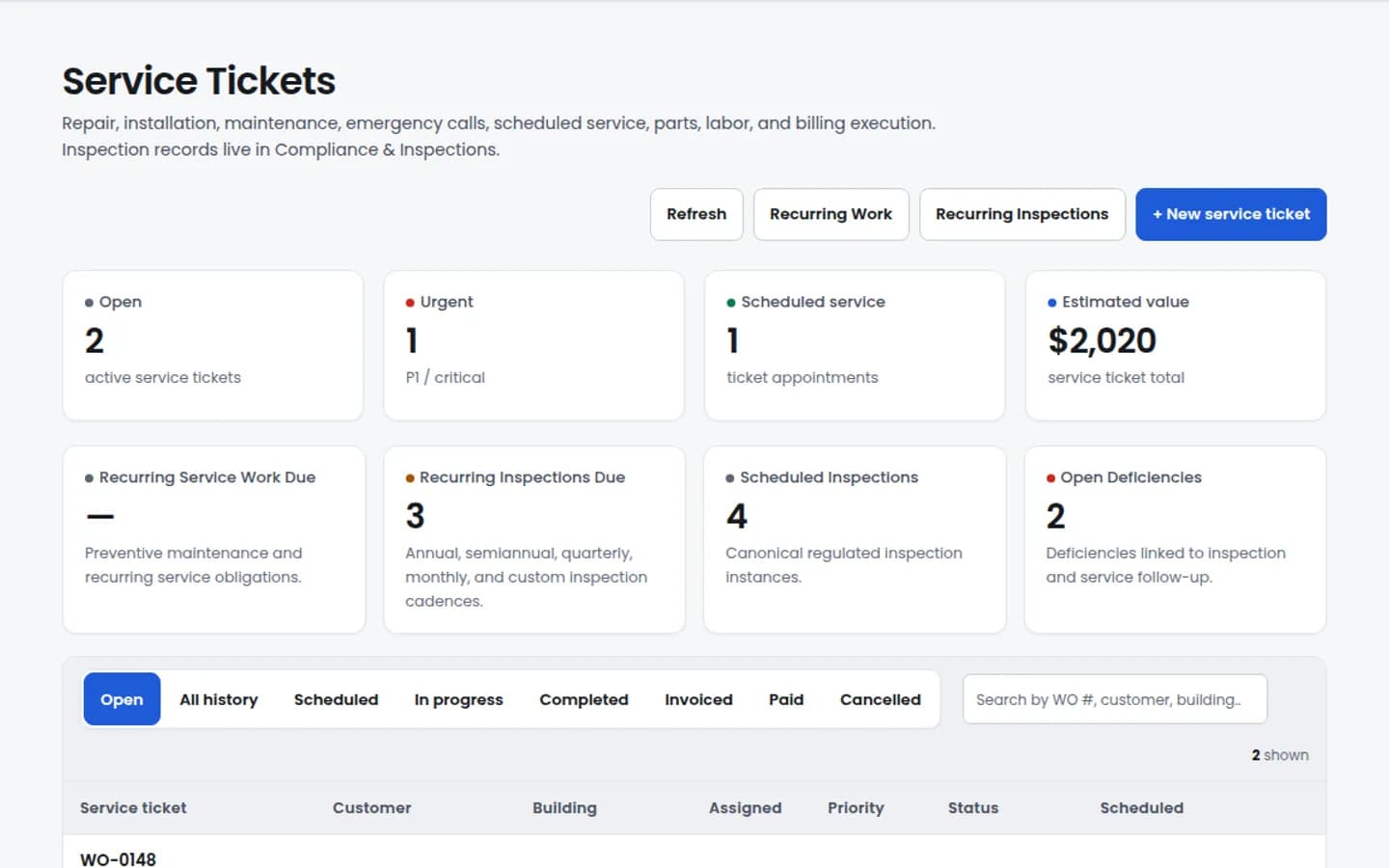
Corrective service follow-up
Track work requests, status, priority, and follow-up without losing inspection or site context.
Request a guided walkthroughTrack licenses, certifications, policies, training, insurance, contract duties, required records, renewals, deadlines, ownership, and proof from the same place the work happens.
Connect permits, inspections, preventive maintenance, equipment requirements, deficiencies, corrective work, documents, vendors, and closeout to the facility and asset record.
Perform inspections, manage evidence, findings, deficiencies, customer and site records, corrective work, reports, scheduling context, and billing-status context without breaking the compliance chain.
Use a free jurisdiction-scoped authority workspace for premises, reports, inspection records, deficiencies, correction evidence, reinspection, enforcement state, and audit visibility where configured.
Universal obligation model
An operating obligation can apply to the organization, a person, a facility, an asset, a vendor, a contract, a customer, a business process, or a jurisdiction. Guspora keeps the requirement tied to the work instead of turning compliance into a disconnected calendar or document folder.
Operating loop
Step 1
Define what applies and why.
Step 2
Assign an accountable owner and due date.
Step 3
Generate the inspection, task, maintenance, training, filing, or document request.
Step 4
Collect evidence and preserve the operating context.
Step 5
Confirm findings and create corrective work when required.
Step 6
Review the proof, close the obligation, and retain the audit history.
Standalone public filing is $20 per initial report. Qualifying paid service-provider plans include a monthly allowance and a lower price for additional initial reports. Supplemental evidence tied to the original filing does not incur another initial-report fee.